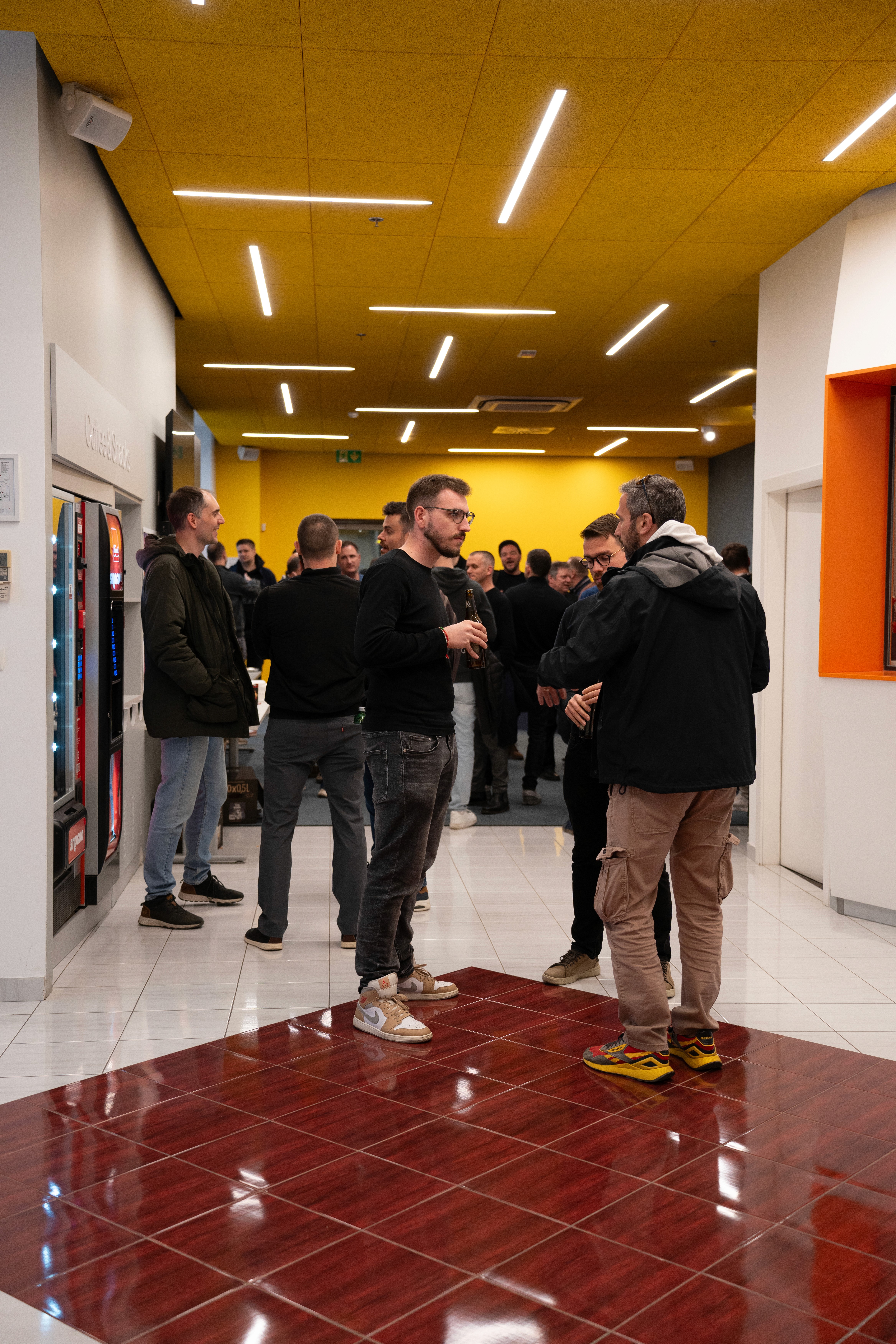
Claude Code is Anthropic's agentic coding tool, a terminal-based AI assistant that doesn't just write code snippets but actively works inside your codebase. It reads files, runs commands, edits code, and can be extended through MCP (Model Context Protocol) servers to connect with external tools like Figma, GitHub, databases, and more.
For developers and technical teams, it changes the speed at which things get built. Not just by writing faster but by handling entire task sequences autonomously while the developer stays in a directing role rather than an executing one.
For non-technical founders and marketers, it means that the gap between "I have an idea" and "this is running" is getting smaller every month.
The Zagreb meetup was built around making that real, not theoretical.
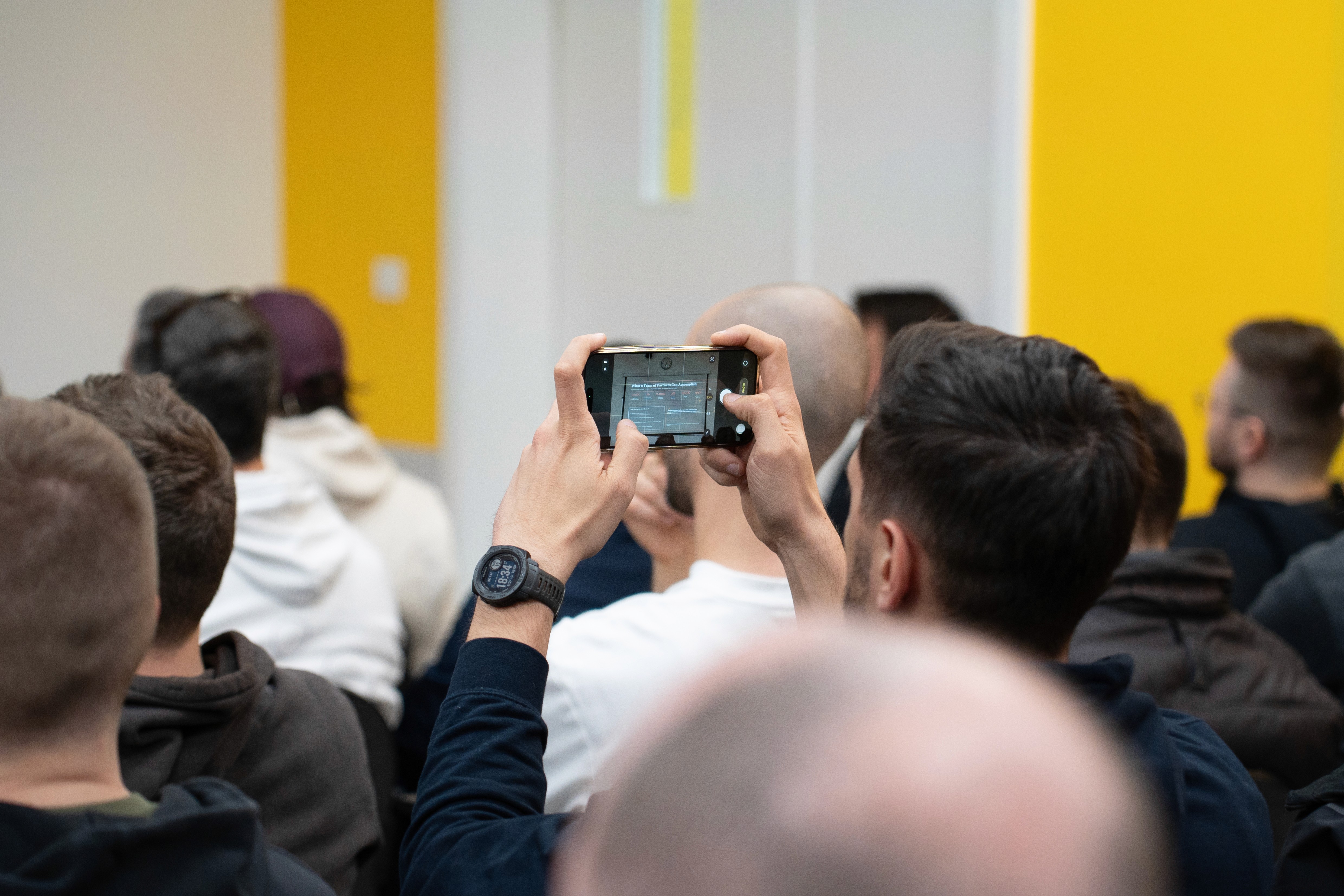
Three speakers took the stage. Each covered a different layer of what Claude Code can actually do.
Josip Vlah, Partner and Head of Creative at RZLT, opened the evening by framing why RZLT organized this. As an AI-native marketing agency, the team doesn't just recommend AI tools to clients. They build with them internally first. Claude Code is part of how RZLT operates, and the Zagreb meetup was a way to bring that knowledge to the broader regional builder community.
Mak Gracic took the audience through Claude Code's core capabilities, with a focus on MCP integrations. MCP servers allow Claude Code to reach beyond the terminal and connect to the tools your team already uses. Figma, Slack, databases, APIs. Mak broke down what this actually means in practice and why the MCP ecosystem is one of the most important things to pay attention to right now if you're building with AI.
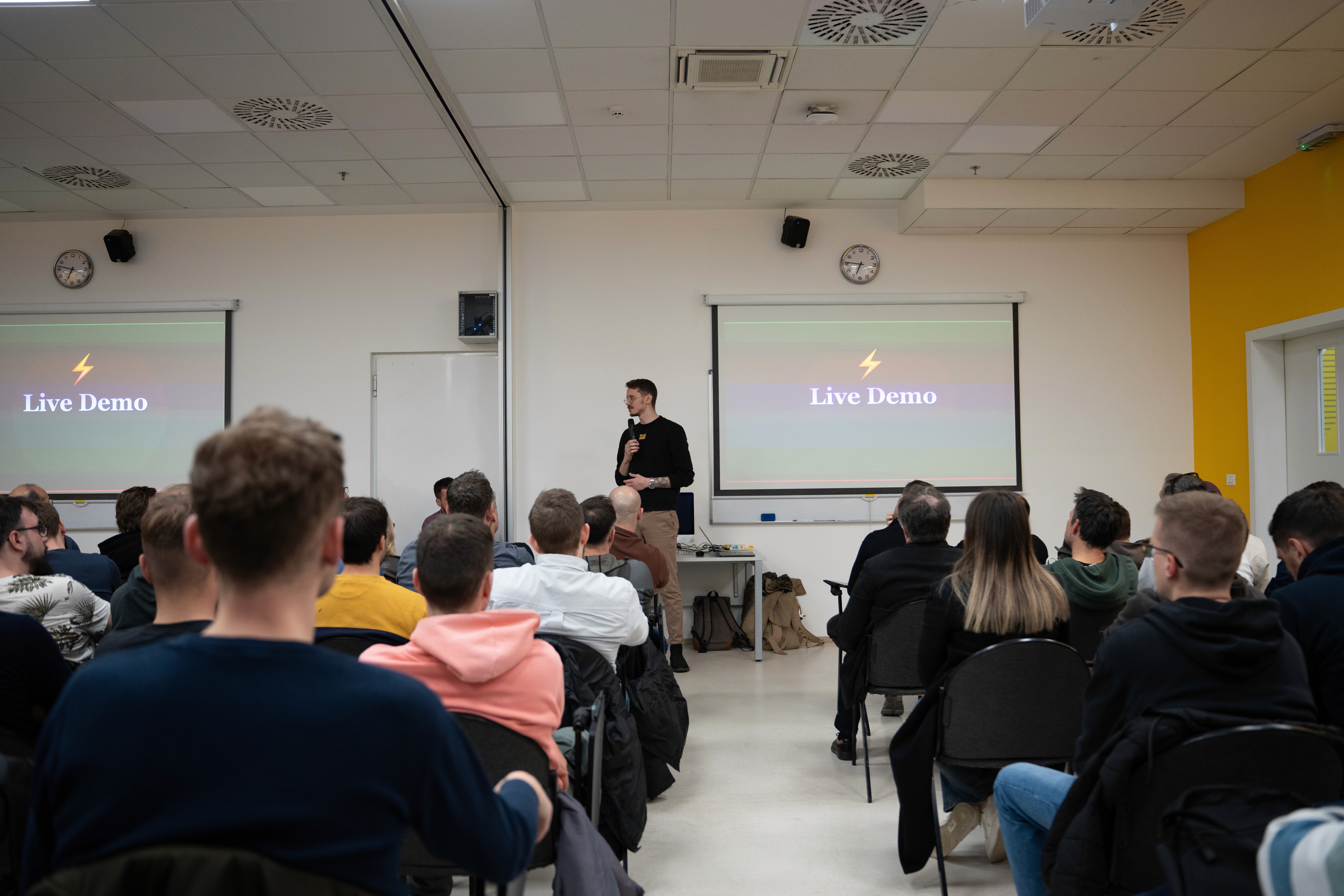
Ivor Baric closed with a live demo and a deep dive into multi-agent orchestration. This is where things got loud. Ivor attempted a live Figma MCP integration on stage and, when the credits started running out, pivoted to get Pencil.dev working in front of the room before they hit zero. It worked. The audience saw exactly what it looks like when an agent is running in real time, making decisions, and producing output. Not a polished recording. Live, slightly chaotic, completely real.
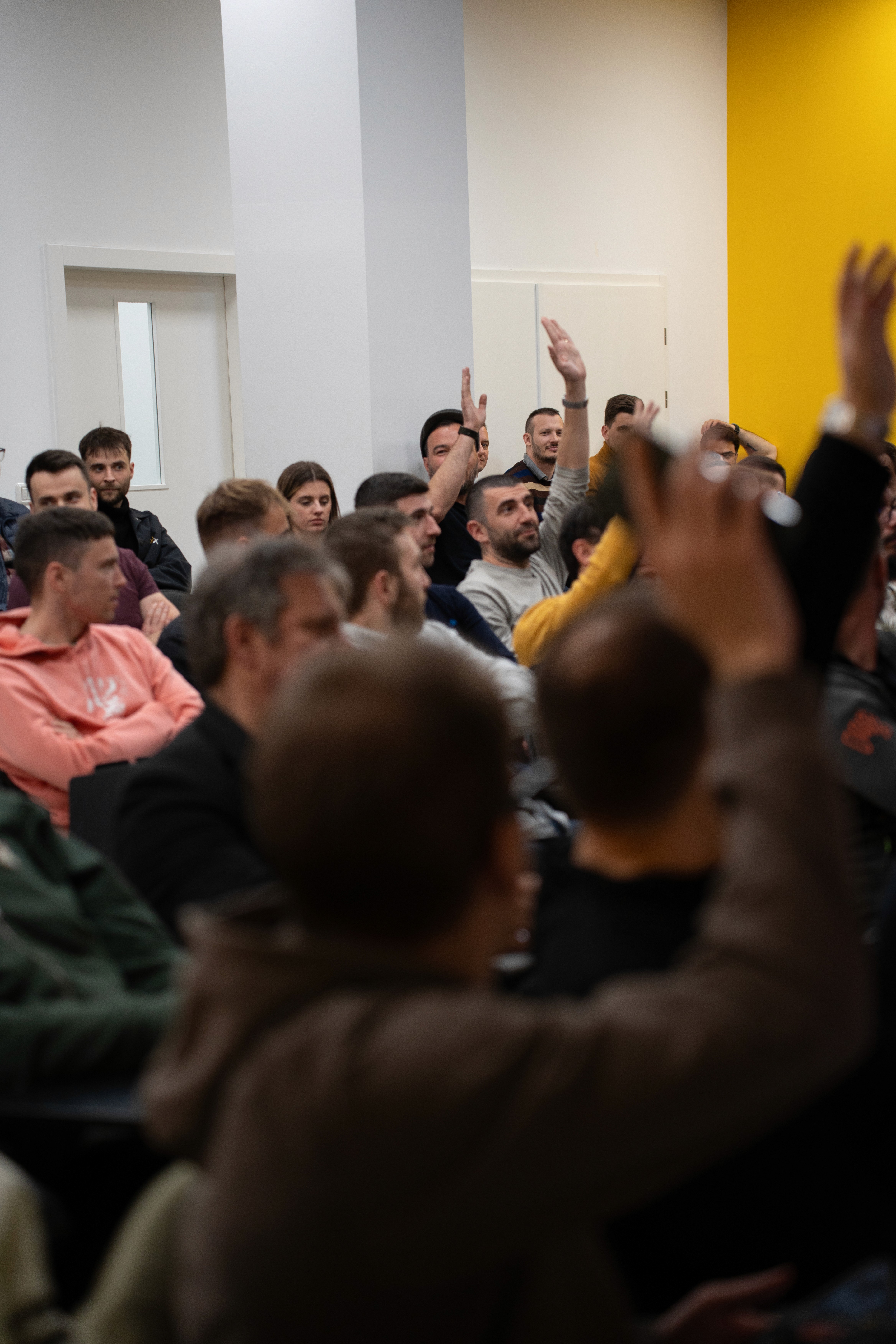
The evening closed with a panel discussion where the audience drove the conversation. Tools surfaced that the speakers hadn't planned to cover, including ICM for persistent agent memory, RTK for token compression with up to 89% savings, Grill Me for stress-testing plans, Prompt Cowboy for rapid prompt improvement, and OpenClaw for always-on agent infrastructure. These weren't on the agenda. The room brought them.
One of the most common misconceptions about AI coding tools is that they are glorified autocomplete. Claude Code operating in a multi-agent setup is a different category of tool.
In a multi-agent setup, individual Claude Code instances handle specific tasks and pass results between each other. One agent researches. One writes. One reviews. One deploys. The orchestrating layer coordinates all of them. What this produces is not a faster version of a single developer but something closer to a small, fast team that does not sleep and does not need to context-switch.
Ivor's demo made this concrete. The audience did not just hear about what was possible. They watched it happen.
The Balkan tech scene has been building quietly for years. Strong engineering talent, a culture that respects technical depth, and a growing community of founders who are not waiting for permission from larger markets to start doing things.
The question was never whether Zagreb could host something like this. It was whether someone would actually organize it.
RZLT did. The region showed up.
The WhatsApp community that formed the same night already has people sharing workflows, deploying agents, and building things that did not exist last week. That kind of activation does not happen in a room full of passive attendees. It happens when the right people are in the same place at the same time and the content gives them enough to actually move with.
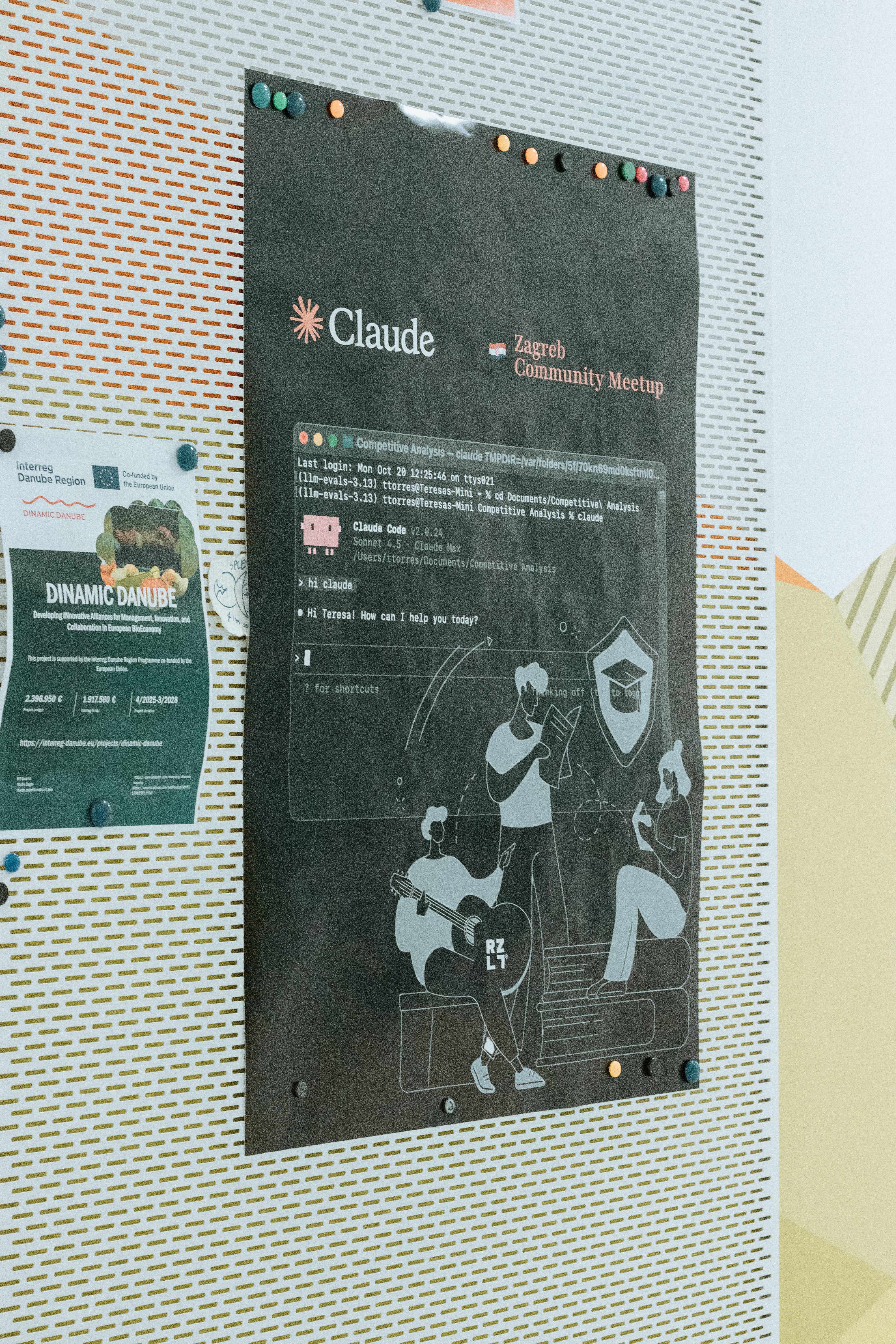
Zagreb is already planning the next one. Ideas on the table include a deep-dive technical panel on edge cases and real production proble
ms, 15-minute lightning talks where builders show what they have shipped, and a non-technical session focused on business and marketing use cases for AI agents.
The first Balkans Claude Code meetup was in Zagreb. The second will be in Bulgaria. The goal is a connected regional builder community that shares knowledge, tools, and what actually works instead of waiting to read about it in a newsletter from somewhere else.
If you are a developer, founder, or operator in the region and want to be part of what is being built, the community is open we are cooking new events!
This is the account to follow:
https://luma.com/user/rzlt
The Zagreb Claude Code meetup was organized by the RZLT team, with special thanks to speakers Ivor Baric, Mak Gracicand to House of Blockchain for their support.
Photos by Jan Pavlin and Filip Milosheski.